
Publicaciones científicas
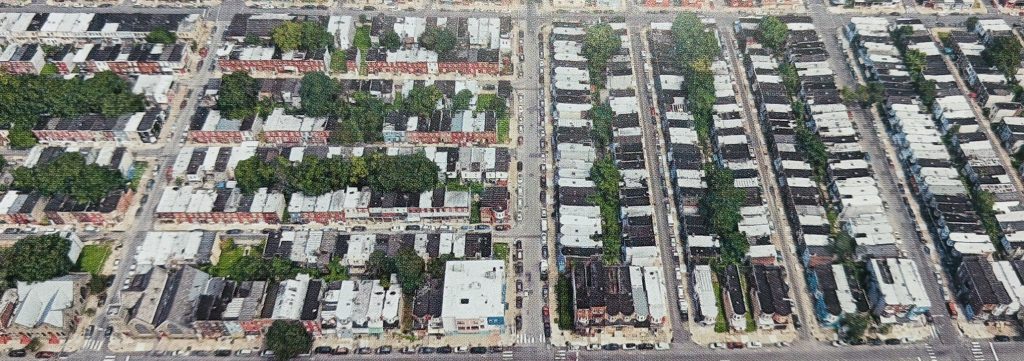
Fuente: Ryan, B. y Wang, E. (2023).
Anderson, Stanford. “Savannah and the Issue of Precedent: City Plan as Resource.” In Settlements in the Americas, edited by Ralph Bennett, 110–144. Newark, NJ: University of Delaware Press, 1993.
Ballon, Hilary. The Greatest Grid: The Master Plan of Manhattan, 1811–2011. New York: Columbia University Press, 2012.
Bosselmann, Peter. Urban Transformation: Understanding City Design and Form. Washington, DC: Island Press, 2008.
Brower, Sidney N. Good Neighborhoods: A Study of In-Town & Suburban Residential Environments. Westport, CT: Praeger, 1996.
Calthorpe, Peter. The Next American Metropolis: Ecology, Communities, and the American Dream. New York: Princeton Architectural Press, 1993.
Conzen, Michael P. “The Study of Urban Form in the United States.” Urban Morphology 5, no. 1 (2001): 3–14. —. The Making of the American Landscape. Boston, MA: Unwin Hyman, 1990.
Duany, Andres, and Emily Talen. “Transect Planning.” Journal of the American Planning Association 68, no. 3 (2002): 245–266. —. Duany, Andres. Suburban Nation: The Rise of Sprawl and the Decline of the American Dream. Edited by Elizabeth Plater-Zyberk and Jeff Speck. 1st ed. New York: North Point Press, 2000.
Ewing, Reid, et al. Growing Cooler: The Evidence on Urban Development and Climate Change. Washington, DC: Urban Land Institute, 2008. —. “Relationship between Urban Sprawl and Physical Activity, Obesity, and Morbidity.” In Urban Ecology, 567–582. Springer, 2008.
Fraker, Harrison. Hidden Potential of Sustainable Neighborhoods: Lessons from Low-Carbon Communities. Washington, DC: Island Press/Center for Resource Economics, 2014.
Hess, P. & Piper, M. & Sorensen, A. (2022). Can We Retrofit Suburban Arterials?: Analyzing the Walkability and Retrofit Potential of Four Toronto Region Corridors. Journal of the American Planning Association. 89(2):1-15. DOI:10.1080/01944363.2022.2033637
Hess, P. and Mandhan, S. (2022). Ramming Attacks, Pedestrians, and the Securitization of Streets and Urban Public Space: A Case Study of New York City. Urban Design International. https://doi.org/10.1057/s41289-022-00180-2
Gauthier, Pierre, Jason Prince, and Jochen A. G. Jaeger. Montréal at the Crossroads: Superhighways, the Turcot and the Environment. Montréal; New York: Black Rose Books, 2009.
Gauthier, P., Boukelouha, R. and Yuxiang, W. (2020). Reading Westmount: mobilizing urban morphology for physical planning, heritage preservation and design control. ISUF 2020 Virtual Conference Proceedings, [S.l.], feb. 2021. ISSN 2709-5274.
Gilliland, Jason, and Pierre Gauthier. “The Study of Urban Form in Canada.” Morphology 10, no. 1 (2006): 51–66.
Lewis, F. Pierce. “Axioms of the Landscape.” Journal of Architectural Education 30, no. 1 (1976): 6–9.
Liebs, Chester H. Main Street to Miracle Mile: American Roadside Architecture. 1st ed. Boston, MA: Little, Brown, 1985.
Moudon, Anne Vernez, and Paul Mitchell Hess. “Suburban Clusters.” Journal of the American Planning Association 66, no. 3 (2000): 243–255.
Moudon, Anne Vernez. “The Changing Morphology of Suburban Neighborhoods.” In Typological Process and Design Theory, edited by Attilio Petruccioli, 141–157. Cambridge, MA: Aga Khan Program for Islamic Architecture at Harvard University/MIT, 1998. —. “Getting to Know the Built Landscape: Typomorphology.” In Ordering Space: Type in Architecture and Design, edited by Karen Franck and Linda Schneekloth, 1–22. New York: Van Nostrand Reinhold, 1994. —. Built for Change: Neighborhood Architecture in San Francisco. Cambridge, MA: MIT Press, 1986.—. “Urban Morphology as an Emerging Interdisciplinary Field.” Urban Morphology 1, no. 1 (1997): 3–10.
Neuman, Michael. “The Compact City Fallacy.” Journal of Planning Education and Research 25, no. 1 (2005): 11–26.
Racine, F. (2023). Reading and understanding the built environment of Quebec (Canada): the result of thirty years of research. Urban Morphology, 27(2), 101–120. http://dx.doi.org/10.51347/UM27.0011.
Racine, François. “Reading and Understanding the Built Environment of Quebec (Canada): The Result of Thirty Years of Research.” Urban Morphology 27, no. 2 (2023): 101–120. —. “The Influence of Urban Design Theories in the Transformation of Urban Morphology: Montreal from 1956 to 2018.” Journal of Urban Design 24, no. 6 (2019): 815–839. —. “Planned Built Environments and City Transformation: Urban Design in Montreal, 1956–2015.” Urban Design and Planning 171, no. 3 (2018): 99–111. —. “Developments in Urban Design Practice in Montreal: A Morphological Perspective.” Urban Morphology 20, no. 2 (2016): 122–137. —. “The Evolution of Urban Design Practice in Montreal from 1966 to 2004.” Journal of the Society for the Study of Architecture in Canada 41, no. 1 (2016): 19–30.
Ryan, B. and Wang, E. (2023). The flexible urban grid: adaptation, expansion, and evolution in Philadelphia’s city block morphology. Urban Morphology, 27(1), 3–30. https://doi.org/10.51347/UM27.0001
Scheer, Brenda Case, and Mintcho Petkov. “Edge City Morphology: A Comparison of Commercial Centers.” Journal of the American Planning Association 64, no. 3 (1998): 298–310. —. Scheer, Brenda Case, and Daniel Ferdelman. “Inner City Destruction and Survival: The Case of Over-the-Rhine.” Urban Morphology 5, no. 1 (2001): 15–27. —. Scheer, Brenda Case. “Historic Infrastructure Left Behind: Should Planners Protect Streets and Blocks?” Journal of the American Planning Association 86, no. 1 (2020): 3–10. —. —. “The Epistemology of Urban Morphology.” Urban Morphology 20, no. 1 (2016): 5–17. —. —. “Who Made This Big Mess?” Journal of Urban Design Winter 9, no. 3 (2005): 25–28. —. —. “The Anatomy of Sprawl.” Places: The Journal of Environmental Design 14, no. 2 (2001): 28–37. —. —. The Evolution of Urban Form: Typology for Planners and Architects. Chicago, IL: American Planning Association, 2010.
Scheer, B. C. (2024). Implementing urban design: green, civic, and community strategies: by Jonathan Barnett, New York and London, Routledge, 2023, 174 pp., ISBN 9781032469966. Journal of Urban Design, 29(2), 261–262. https://doi.org/10.1080/13574809.2024.2311998
Scheer, B. C. (2022). The Plat of Zion and Urban Development in Salt Lake City. Utah Historical Quarterly 1 July; 90 (3): 215–227. doi: https://doi.org/10.5406/26428652.90.3.03
Southworth, Michael, and Peter Owens. “The Evolving Metropolis: Studies of Community, Neighborhood, and Street Form at the Urban Edge.” Journal of the American Planning Association 59, no. 3 (1993): 271–287.
Stanilov, Kiril, and Brenda Case Scheer. Suburban Form: An International Perspective. New York: Routledge, 2004.
Talen, Emily. City Rules: How Regulations Affect Urban Form. Washington, DC: Island Press, 2012. —. “Sense of Community and Neighbourhood Form: An Assessment of the Social Doctrine of New Urbanism.” Urban Studies 36, no. 8 (1999): 1361–1379.
Vance, James E. The Continuing City: Urban Morphology in Western Civilization. Baltimore, MD: Johns Hopkins University Press, 1990.
Wheeler, Stephen. “Built Landscapes of Metropolitan Regions: An International Typology.” Journal of the American Planning Association 81, no. 3 (2015): 167–190.
Whitney, R. A., Hess, P.M., and Sarmiento-Casas, C. (2020). Livable Streets and Global Competitiveness: A Survey of Mexico City. Journal of Planning Education and Research, February, 0739456X20904428. https://doi.org/10.1177/0739456X20904428.